Security Awareness Training That Actually Changes Behavior
Security technology has improved enormously. Email filters catch more, endpoint tools detect faster, and monitoring platforms surface threats that would have gone unnoticed a decade ago.
Attackers adapted by going around all of it. Instead of defeating your defenses, they persuade someone inside your organization to let them through. A convincing email, a phone call from a supposed vendor, an urgent request that appears to come from a senior executive. These work because they target judgment, not systems.
That makes employee behavior one of the most consequential variables in your security posture, and it’s why security awareness training effectiveness matters so much. But there’s an important distinction buried in that phrase: awareness and behavior are not the same thing. An employee can know that phishing exists, complete the annual training, pass the quiz, and still click a well-crafted link on a busy Tuesday afternoon.
Programs that reduce risk are the ones that change what people actually do.
Why Traditional Security Training Falls Short
The standard model at most organizations is an annual training module, usually a set of videos followed by a short quiz, completed once and forgotten. It exists primarily to produce a completion record for auditors.
There are a few reasons this approach rarely changes behavior.

Knowledge fades quickly
Content absorbed in a single sitting decays over the following weeks. By month six, most of what was covered is gone, and month six is just as likely to be when an attack arrives.

Generic content doesn't connect
Training built for a general business audience uses examples that don’t resemble what your team sees. A manufacturing employee handling supplier communications and a medical billing specialist processing patient records face different threats, and generic scenarios don’t prepare either of them.

There's no practice
Watching a video about phishing is not the same as encountering one. Recognition is a skill, and skills need repetition to develop.

Completion is treated as the outcome
When success is defined as everyone finishing the module, the program optimizes for completion rather than capability. The certificate gets filed, and nothing about daily behavior shifts.
What Effective Security Awareness Training Looks Like
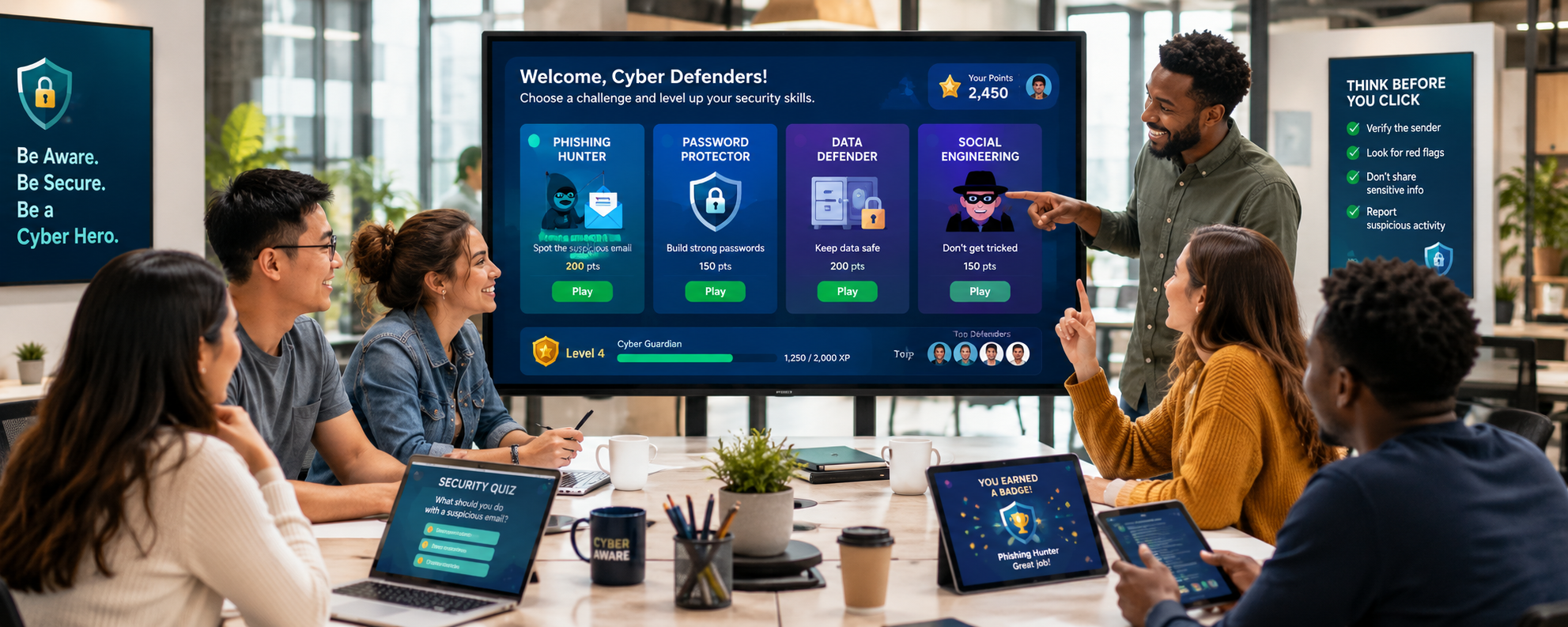
Programs that produce real change share a set of characteristics.
They’re continuous rather than annual, delivering shorter content more frequently so awareness stays current. They’re relevant to the specific organization, using examples drawn from the industry, the systems, and the workflows employees actually use. They include practice through simulation, giving people safe opportunities to encounter realistic threats. They’re role-appropriate, recognizing that an executive, an IT administrator, and a front-desk employee face different risks. And they’re measured, with metrics that track whether behavior is improving rather than just whether training was completed.
Five Ways to Build Lasting Security Habits
1. Use Practical, Realistic Examples
Abstract warnings don’t stick. Specific scenarios do.
Instead of explaining phishing in general terms, show your team the kind of message they’d plausibly receive: an invoice from a supplier they work with, a shared document notification from a platform they use daily, a request from a manager to handle something urgently. When training mirrors reality, recognition transfers to the real thing.
2. Deliver Training Regularly
Replace the annual marathon with consistent, shorter touchpoints. Monthly reminders, quarterly modules, and brief updates when new threats emerge keep security present in people’s thinking rather than filed away with last year’s compliance paperwork.
Frequency matters more than duration. Ten minutes every month outperforms two hours once a year.
3. Run Phishing Simulations
Simulations are where awareness becomes skill. Sending realistic but harmless phishing attempts reveals genuine vulnerability, and more importantly, delivers instruction at the exact moment someone is most receptive to it.
An employee who clicks and immediately receives brief, non-punitive coaching remembers that lesson far longer than any module. Over successive rounds, click rates typically fall as people develop the instinct to pause.
4. Reinforce Positive Behavior
How your organization responds to reporting determines whether reporting continues.
If an employee flags a suspicious email and receives a thank-you, others notice. If they’re made to feel foolish for reporting something that turned out to be legitimate, reporting stops, and so does your early warning system. Recognize the behavior you want. The goal is an environment where raising a concern feels routine rather than risky.
5. Measure and Improve Continuously
Treat your program as something to refine rather than repeat. Review simulation results, identify which topics or departments need reinforcement, and adjust content accordingly. A program that responds to its own data improves; one that runs unchanged for years plateaus.
Metrics That Show Training Is Working
Completion rates tell you people finished. These metrics tell you whether it mattered:
Phishing simulation click rate
The percentage of employees who engage with simulated attacks, tracked over time. A declining trend is the clearest indicator of behavioral change.
Reporting rate
How many employees actively report suspicious messages. Rising reporting rates signal both awareness and a healthy culture around raising concerns.
Time to report
How quickly a suspicious message gets flagged. Faster reporting shortens the window an attacker has to operate.
Repeat click behavior
Whether the same individuals click repeatedly, indicating where targeted reinforcement is needed.
Engagement with content
Whether people complete training thoughtfully or click through to finish.
Together, these show whether your program is producing capability or just paperwork.
Supporting Compliance Through Employee Education
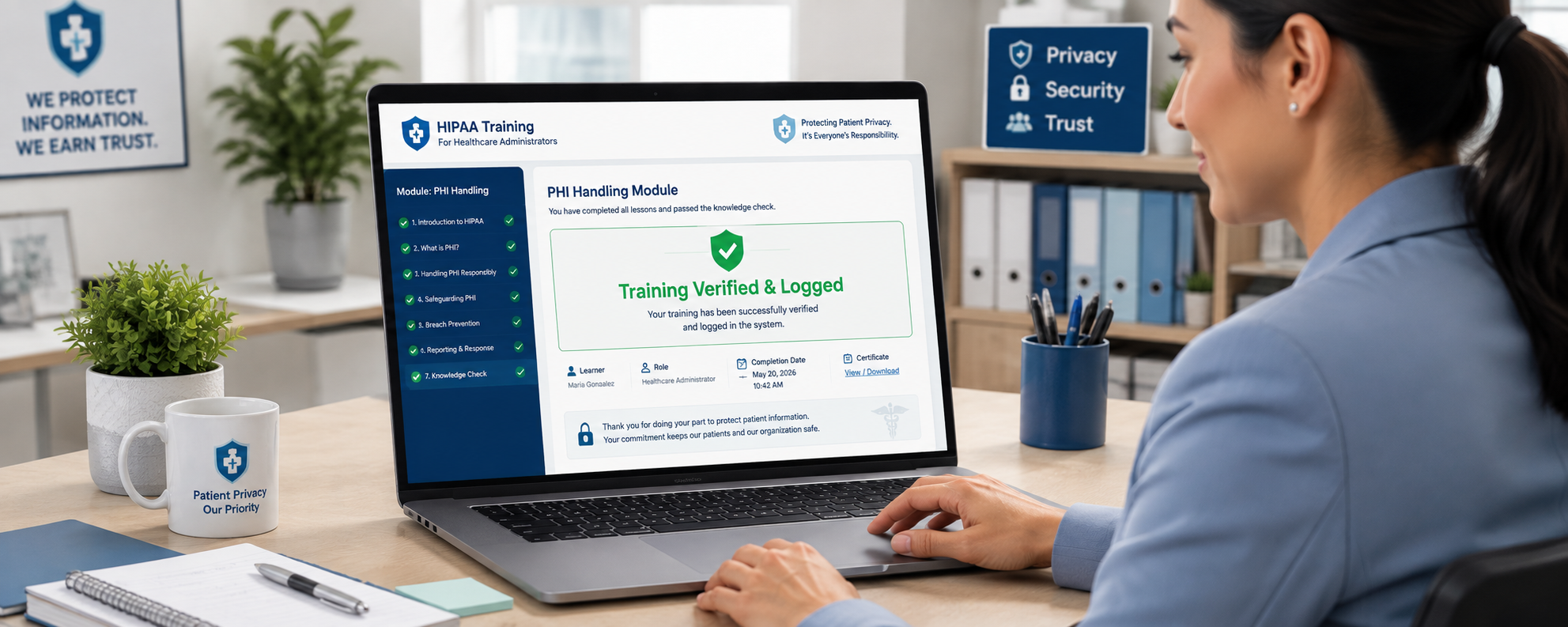
Security awareness training is a documented requirement across the frameworks that govern regulated industries.
CMMC includes awareness and training controls requiring both general awareness for all users and role-based training for staff with security responsibilities, with evidence that training occurred. HIPAA requires a security awareness and training program for all workforce members handling protected health information. NIST SP 800-171 and 800-53 specify awareness and role-based training requirements, along with documentation demonstrating delivery.
Assessors look for evidence: training records, content, delivery dates, and completion tracking. A well-run program satisfies those expectations naturally, because the documentation is a byproduct of doing the work properly rather than something assembled before an audit.
The organizations that benefit most treat compliance as the floor rather than the objective. Meeting the requirement is straightforward; building a workforce that reliably spots threats delivers value the requirement alone never will.
How DataSure24 Helps Organizations Build a Security-First Culture
Our Security Awareness Training is built around behavior change rather than completion tracking.
We tailor content to your industry and compliance obligations, so manufacturing clients see CMMC-relevant scenarios and healthcare organizations get HIPAA-focused examples. We run ongoing phishing simulations with immediate coaching for anyone who clicks, and we deliver reporting that shows both your risk trend and the documentation your auditors expect.
It’s an ongoing managed program, not a library of videos. We handle the delivery, the measurement, and the reinforcement so your team can focus on their work.
Start Building Real Security Habits
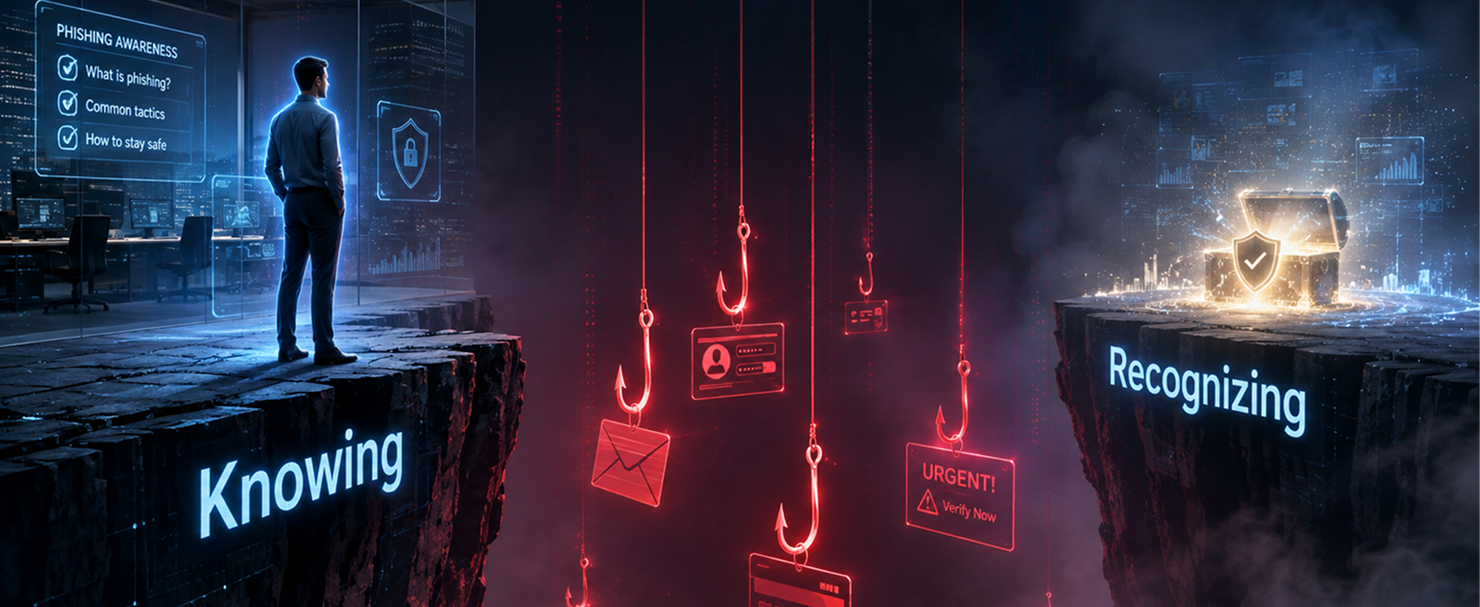
The gap between knowing about phishing and reliably recognizing it is where most breaches happen. Closing that gap takes consistency, relevance, and practice, not a longer annual module.
If your current training exists mainly to produce completion records, there’s meaningful room to improve both your security posture and your compliance evidence. Schedule a time to talk with our team at datasure24.com.